
Geoeconomics, trade and economic security
Course description
Over the last fifteen years, the international economic order designed in the aftermath of World War II has been fundamentally challenged. A series of shocks – from the 2008 financial crisis to the COVID-19 pandemic, war in Ukraine, and heightened China-US rivalry – have raised geopolitical tensions and led to a weaponisation of trade. International trade patterns are increasingly determined by national and economic security considerations as well as by non-economic policy objectives, ranging from combatting climate change to protecting workers and promoting social values. Digitalisation is also transforming international trade. This course will equip participants with the knowledge and skills needed to navigate today’s intricate world of trade policy and diplomacy. Participants will learn from leading experts, explore case studies, and engage in interactive discussions to develop a profound understanding of the international trade system.
This course is also part of the curriculum of the EUI Global Executive Master, in Economy and Finance (ECOF) and Geopolitics and Security (GEOS) specialisation tracks.
Learning outcomes
By the end of this module, participants will be able to:
- Demonstrate in-depth empirical and policy-relevant understanding of the main international trade issues facing policymakers and how they are changing as a result of economic and geopolitical forces at play;
- Develop analytical skills to understand the use of public and private policies in this new geoeconomic environment; · Recognise how support for specific positions regarding trade is formed and what are the key elements for success;
- Evaluate the effectiveness of different strategies for building consensus in complex decision-making scenarios;
- Develop skills to write, discuss, negotiate and communicate international trade issues for a range of audiences.
Information for applicants
The course is designed for an online audience and includes live online sessions, pre-readings, and assignments with feedback. As a participant you can expect a hands-on approach, live interaction, and engagement with real-world examples. The course will have live online sessions each week between 13 November and 8 December 2026. For a detailed schedule and an overview of learning activities together with the exact dates and time of the sessions, please consult the programme timetable.
Certification
Participants who complete all the necessary course assignments and attend at least 75% of the sessions will receive a Certificate of Completion with 3 ECTS credits included. The credits obtained by completing this course can be used towards the EUI Global Executive Master. Participants who do not complete the assignments but have regularly attended the course will receive a Certificate of Attendance.
Fees
We encourage early registrations for this course as places are given on a rolling basis.
More information about the cancellation policy applicable to this course.
Full Fee
€ 1,200
Participants will be enrolled in the EUI’s virtual learning environment to access the materials of the course. All live online sessions will be recorded and available for viewing.
Early bird
€ 1,080
The early bird discount (10%) applies to registrations by 2nd October 2026 - 23:59 CET.
Affiliation and groups
€ 1,020
The affiliation discount (15%) applies to NGO staff, national civil servants of EU member states, and EU officials (from EU institutions, bodies, and agencies).
The same discount applies to groups of more than three people.
Alumni and ETGN

€ 960
The alumni discount (20%) applies to EUI alumni and former paying participants of Florence STG courses.
This course can be taken as part of the Executive Certificate in European and Transnational Governance, with a 20% discount on the total fee.
Course Directors
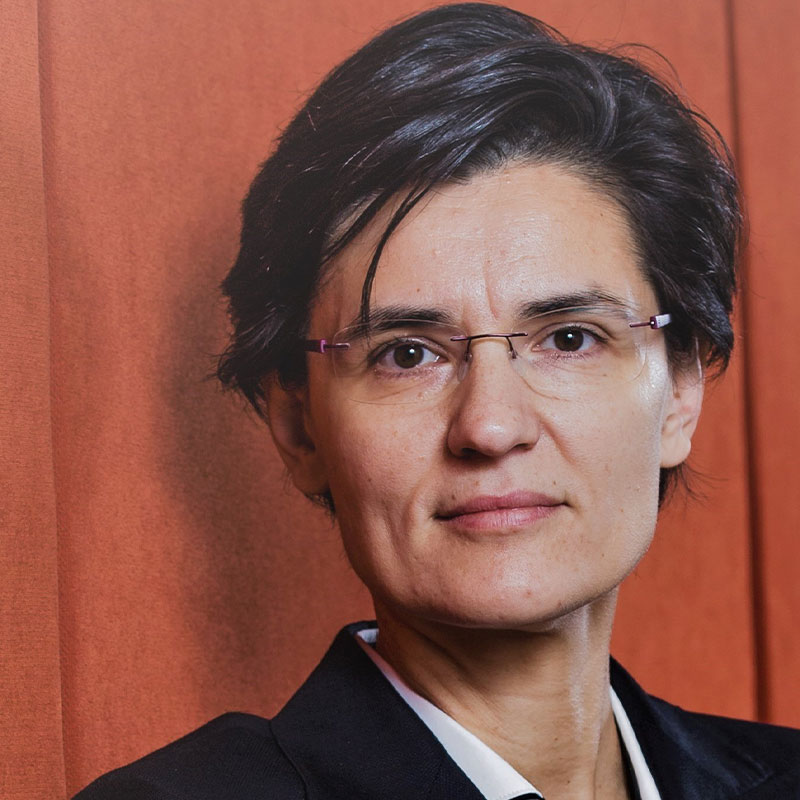
Maria Demertzis
Part-time Professor
Florence School of Transnational Governance

Arancha González Laya
Part-time Professor
Florence School of Transnational Governance
Instructors

Sabine Weyand
EU Fellow
Florence School of Transnational Governance
Contacts

Emma Strocchi
Project Associate
Florence School of Transnational Governance