
Making Sanctions Work: Political, Legal, and Economic Challenges of EU Restrictive Measures
Course description
The sanctions packages adopted by the EU, which intend to intensify pressure on Russia’s government and economy, have reignited traditional debates about the appropriate political, legal, and economic reach of restrictive measures. Politically, for instance, the legitimacy of international sanctions has been challenged on the grounds of their unilateral coercive nature and their potential to affect domains beyond strict targets. Issues of uniform implementation and effective enforcement have also emerged, resulting in several initiatives at the EU level.
On the legal side, international sanctions have become one of the most voluminous fields of litigation before the EU Courts. Through their case law, they actually shape the limits of this impactful foreign policy tool, giving an answer to unresolved questions related to the procedural rights of sanctioned persons, the burden and standard of proof, and the scope of judicial review, confidentiality, damages, etc. Some of the restrictive measures adopted in response to the Ukraine crisis, particularly anti-circumvention measures, have been criticised as regulating extraterritorial conduct.
Finally, the economics of the international sanctions put in place by the EU against Russia have awakened a singular interest among scholars and specialists. The keywords in that regard are ‘effectiveness’ and ‘impact’.
Are EU sanctions effective as tools for conditioning Russia's actions?
Can those measures be designed to reduce the negative impact on the EU’s economy?
Emphasis has also increasingly been put into place on implementation and enforcement. The effectiveness of restrictive measures fundamentally depends on the level of implementation by the private sector.
In the seventh edition of this executive programme, designed and delivered by EU policymakers, judges, leading academics, and compliance professionals, participants will acquire an analytical and practical toolkit for understanding sanctions from various angles – legal, economic, political – and for evaluating their effectiveness.
Sessions will cover, among others, the objectives, impacts, and limitations of sanctions against Russia, the EU decision-making in the area of restrictive measures, the fundamentals of EU sanctions compliance, and the current trends and challenges in the judicial review of the EU Sanctions.
Learning methods
- Knowledge transfer sessions led by experienced practitioners, lawyers and academics, with extensive expertise on the key legal and policy issues relating to restrictive measures;
- Three online training sessions and two days of interactive residential training focusing on the issues and main challenges arising from the implementation and judicial review of the EU sanctions policy;
- By blending experts’ inputs and learners’ interaction (case-study discussions on decision-making scenarios), this executive training also creates an enabling environment for peer learning and networking
Learning outcomes
By the end of this programme, the participants will be able to:
- Identify the most relevant political, legal, and economic challenges raised by the EU restrictive measures system and the international context in which they operate;
- Recognise the different packages of restrictive measures adopted by the EU in the current Ukraine crisis and beyond and compare them with those adopted in other foreign jurisdictions;
- Distinguish the different mechanisms whereby EU restrictive measures become law and the practical implications of their enforcement;
- Categorise the legal means by which judicial review of EU restrictive measures is ensured by the Courts of the EU;
- Assess the impact of EU judicial doctrines on the development of EU fundamental rights protection;
- Understand the fundamentals of EU sanctions compliance and how to perform risk-based due diligence, particularly in the face of circumvention risks;
- Evaluate the degree of economic effectiveness and political legitimacy of restrictive measures, their compliance with public international law, as well as their placement within the EU’s external policy and their geopolitical potential.
Who should attend
- Civil servants of national administrations, including diplomats, in particular those involved in European affairs.
- Practising lawyers before EU and national courts.
- Researchers focusing on international law and EU international relations and external policy.
- Civil servants of EU institutions and services working in the field of restrictive measures.
- In-house legal and compliance professionals.
Information for applicants
- The online part of the training will start with live online sessions (via Zoom) on 12, 14, and 19 May (the online session is from 15:00-16:30 CET)
- Participants will be enrolled in our Virtual Learning Environment (Brightspace) to access the training materials. Some pre-training reading might be necessary.
- The residential part of the training will take place at the Florence School of Transnational Governance in Palazzo Buontalenti (Via Cavour 65) on 25-26 May 2026 (from 9:30-17:00 CET)
- Exceptionally, this executive training course will be followed up by a full-day conference on Economic Statecraft on 27 May 2026, organised by the EUI Law Department. Course participants are welcome to attend. More information is available on the corresponding event page.
- Participants are expected to make their own travel and accommodation arrangements for the duration of the residential part of the course.
- Participants who attend the full programme will receive a Certificate of Attendance
Fees
We encourage early registrations for this course as places are given on a rolling basis.
More information about the cancellation policy applicable to this course.
Full Fee
€ 1,950
The lunches and coffee breaks during the residential part of the programme, as well as social activities, will be provided by the EUI. The fee does not cover travel and accommodation. Our events team can offer you accommodation recommendations in the city.
Early bird
€ 1,755
The early bird discount (10%) applies to registrations by 20 February 2026 - 23:59 CET.
Affiliation and groups
€ 1,657
The affiliation discount (15%) applies to NGO staff, national civil servants of EU member states, and EU officials (from EU institutions, bodies, and agencies). The same discount applies to groups of more than three people.
Alumni and ETGN

€ 1,560
The alumni discount (20%) applies to EUI alumni and former paying participants of Florence STG courses.
Scholarships
This course is part of the Florence STG Annual Scholarship Programme, which provides a limited number of fee waivers for selected open-call courses.
Course Director

Kristin Fabbe
Full-time Professor
Florence School of Transnational Governance
Instructors

Hana Attia
Assistant Professor of Security Policy and Peace
Leuphana University

Maria Demertzis
Part-time Professor
Florence School of Transnational Governance

Inge Govaere
Professor of European Law, Director of the Ghent European Law Institute
Ghent University

Dawson Law
Founder
Conseil Global Advisors

Jan Lepeu
Research Fellow
Florence School of Transnational Governance

Petra Mahnic
Senior Fellow
Florence School of Transnational Governance

David O’Sullivan
EU Sanctions Envoy
European Commission

Paschalis Paschalidis
Counsel
Arendt & Medernach SA

Clara Portela
Full-time Professor
University of Valencia
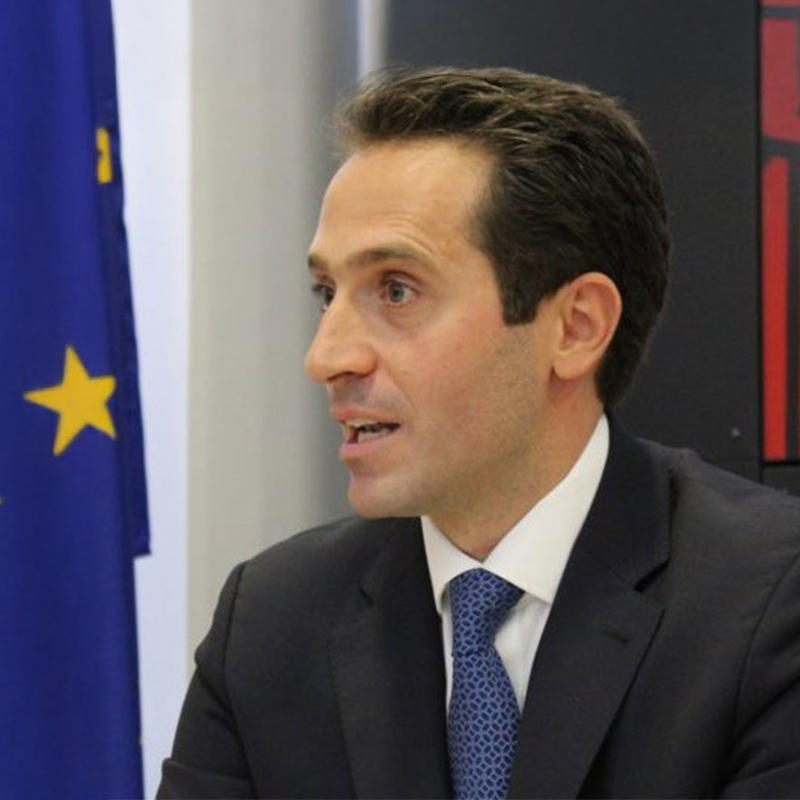
Juan Ignacio Signes De Mesa
Senior Fellow
Florence School of Transnational Governance

Frederik van Essen
Legal Advisor, Export Controls & Sanctions
Velegal

Jan Dunin-Wasowicz
Partner | Member of the Paris & New York Bars
Bennink Dunin-Wasowicz

Charlotte Beaucillon
Full Professor
UPEC Law School, MIL research lab
Contacts

Jansulu Abdikyerim
Project Associate
Florence School of Transnational Governance
Testimonials

Marta González Pérez
Euroclear
Head of Sanctions
"This is an excellent programme that offers a holistic view of EU sanctions, from the early stages of the decision-making process to the monitoring of their effectiveness, without forgetting the challenges faced by legal and compliance professionals."

Valerijus Ostrovskis
Acquis
Co-Founder and Partner
"It was an excellent opportunity to exchange perspectives with practitioners, policymakers, academics, and EU officials on the future of sanctions law and compliance."

Lucrezia Restuccia
UniCredit
Lawyer
"This executive training course exceeded my expectations. It will significantly benefit my day-to-day work by offering insights into various aspects of sanctions from academic, regulatory, and legal perspectives."